
Blogs
Recent Posts
Landscape Drainage & Grading: Signs Your Long Island Property Has a Problem
Doug Connell • October 2, 2026
Standing water, soggy lawn areas, erosion, and moisture near the foundation can all point to a drainage or grading problem. These issues usually mean rainwater is collecting in low areas or flowing toward parts of the property that should remain dry. Correcting the cause can help protect the lawn, landscape features, and foundation from further damage.
Common Signs of a Drainage Problem
Drainage problems are not always limited to large puddles after a storm. Water may collect below the surface, move across sloped areas, or settle near outdoor structures. Common warning signs include:
- Standing water that remains after rainfall
- Soft, muddy, or soggy lawn areas
- Moisture collecting near the foundation
- Soil or mulch washing away
- Visible runoff or erosion paths
- Thinning turf in consistently wet areas
- Water pooling around patios or walkways
Repeated water buildup in the same location usually means the property is not draining properly.
Why Long Island Properties Develop Drainage Issues
Drainage problems can be caused by the property’s elevation, soil conditions, surrounding construction, or original grading. Flat lots may drain slowly, while compacted or clay-heavy soil can make it difficult for water to soak into the ground.
Other common causes include:
- Low areas that collect rainwater
- Downspouts releasing water in one place
- Soil compacted during construction
- Patios or walkways changing water flow
- Poor grading around the house
- Clogged or damaged drainage systems
Because conditions vary across Long Island, the right solution should be based on how water moves across the individual property.
Foundation Grading vs. Yard Drainage
Foundation grading focuses on directing water away from the house. When the ground slopes toward the structure, moisture may collect beside foundation walls and increase the risk of dampness, leaks, or soil settlement.
Yard drainage addresses water across the wider property. It may involve correcting low spots, managing roof runoff, or creating a better route for water to move away from lawns, planting areas, patios, and walkways.
Common Drainage and Grading Solutions
The best solution depends on where the water comes from, where it collects, and how it can be safely redirected. Some properties may need one improvement, while others benefit from several methods working together.
Regrading
Regrading reshapes the surface of the property so water flows away from foundations, low spots, and outdoor features. It is often used when the existing slope is uneven, too flat, or directs runoff toward the wrong location. The process can also help create a more consistent surface for lawns, planting areas, and other landscape improvements.
French Drains
French drains collect excess water below the surface using perforated piping surrounded by drainage stone. They may help manage saturated lawn areas, water moving across a slope, or moisture collecting along specific parts of the property. Because the system is installed underground, it can improve drainage without leaving a large visible channel.
Dry Wells
Dry wells collect runoff and allow it to disperse gradually into the surrounding soil. They may be useful for managing water from downspouts, patios, or areas where runoff gathers in a concentrated location. The size and placement of the system should match the amount of water the property typically receives.
Swales
Swales are shallow, graded channels that guide surface water across the property toward a safer drainage area. They can provide a practical way to redirect runoff without installing a fully enclosed underground system. When properly shaped, a swale can blend naturally into the surrounding lawn and landscape.
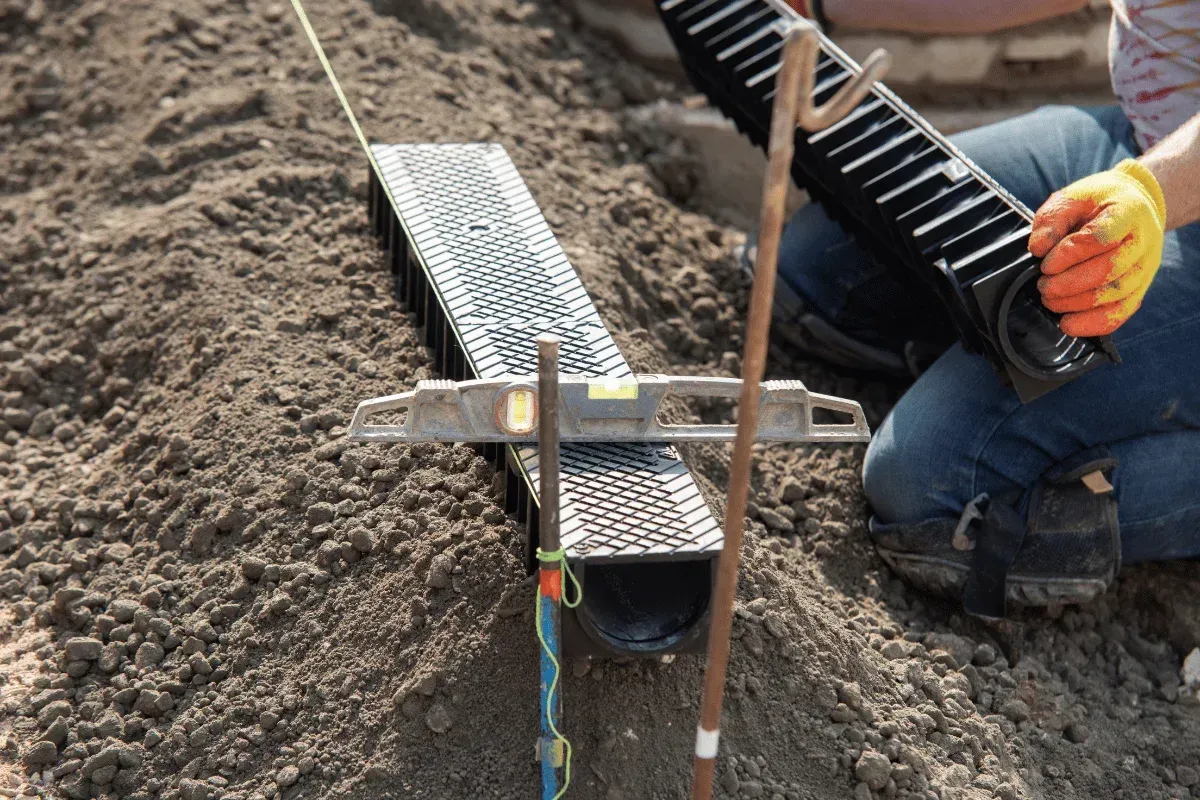
Catch Basins and Drainage Pipes
Catch basins collect surface water from low areas and direct it through underground drainage pipes. They are often placed where runoff regularly pools near lawns, walkways, patios, or other hard surfaces. Proper placement and grading are important so the system moves water safely without creating a new drainage problem elsewhere.
Long Island Landscaping Services That Address the Whole Property
Island Associates provides landscaping services that consider how grading, soil preparation, planting, and drainage work together. We evaluate how water moves around lawns, planting areas, walkways, patios, and foundations before recommending improvements.
Our related services include grading, site preparation, planting installation, sod and turf work, landscape lighting, and complete landscape installations. Coordinating these elements helps create an outdoor space that looks finished while also managing water more effectively.
Improve Your Property With Professional Drainage and Grading
Recurring puddles, soggy lawn areas, erosion, and moisture near the foundation should not be ignored. We can evaluate how water moves across your property and recommend practical grading or drainage improvements. Contact us today to discuss professional landscaping services for your Long Island property.