
Blogs
Recent Posts


Landscape Lighting on Long Island: How to Illuminate Your Yard the Right Way
Doug Connell • July 28, 2026
Landscape lighting in Long Island can make your property safer, more inviting, and more enjoyable after sunset. The right plan highlights the best parts of your home while giving walkways, patios, and outdoor features the visibility they need. Instead of placing lights everywhere, the goal is to use a balanced design that looks natural and works for how you use your yard.
Why a Layered Lighting Plan Makes a Difference
A well-designed lighting plan does more than brighten the area around your home. It creates depth by combining lighting for safety, architecture, pathways, and outdoor living spaces. Each fixture should have a purpose, so your property feels polished rather than overlit.
A layered design can help improve:
- Curb appeal: Soft lighting can draw attention to stonework, trees, entryways, and architectural details after dark.
- Safety: Path lights, step lights, and wall lights help make walkways, stairs, and patio edges easier to see.
- Outdoor use: Landscape lighting can make patios, seating areas, and entertaining spaces easier to enjoy later in the evening.
- Security: Thoughtful exterior lighting can reduce dark areas around entrances, driveways, and key access points.
Use the Right Lighting Techniques for Each Feature
Different outdoor features need different types of lighting. A pathway should be easy to follow, while a mature tree or stone wall may need a focused accent light to stand out. Combining a few techniques creates a more comfortable and intentional result.
- Path lighting: Place fixtures about 6 to 8 feet apart and stagger them along the sides of the walkway to guide movement without creating glare.
- Uplighting: Position uplights at a 30 to 45 degree angle to highlight trees, columns, textured walls, or other focal points.
- Moonlighting: Install downlights higher in mature trees and aim them downward for a soft, natural effect across the ground.
- Step and wall lighting: Use recessed or concealed fixtures under step edges, retaining wall caps, or railings to define changes in elevation.
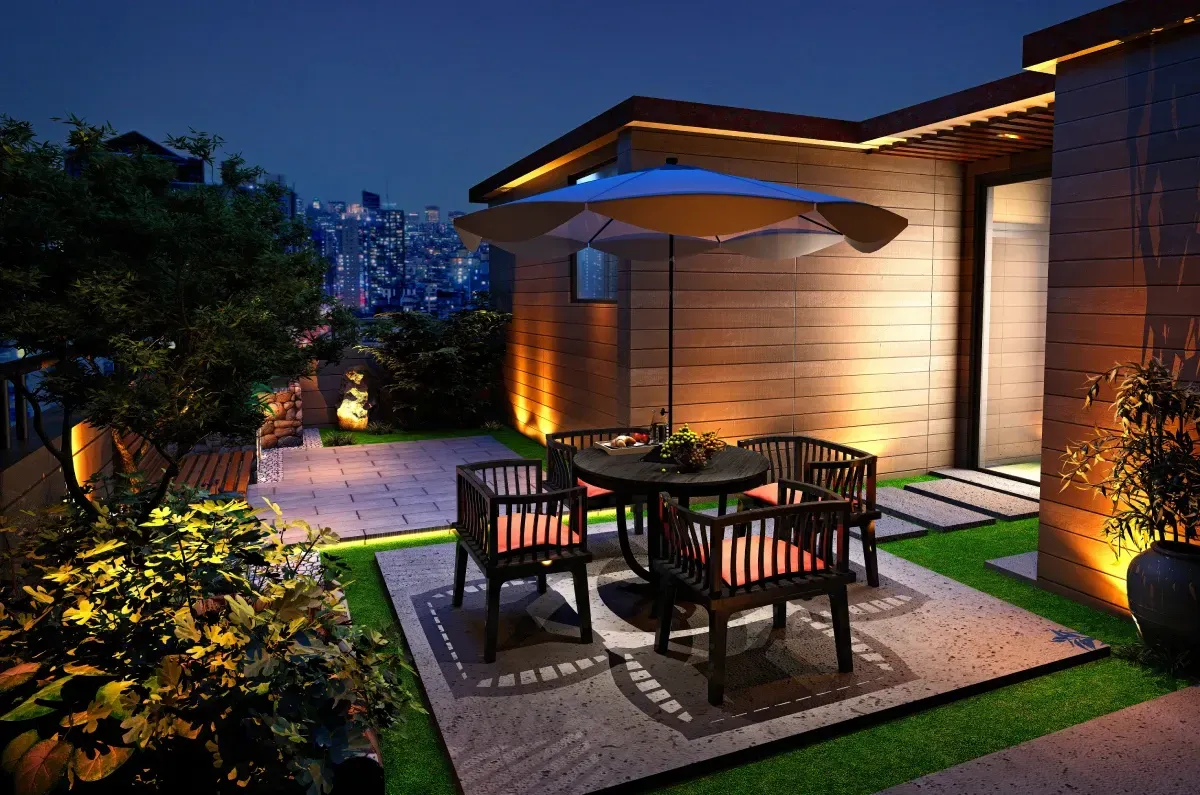
- Patio lighting: Add subtle lighting around seating areas, outdoor kitchens, pergolas, or pool surrounds to support nighttime use.
Use Warm, Hidden Fixtures
Warm 2700K to 3000K lighting gives stone, pavers, and exterior features a softer, more natural appearance. Keep fixtures tucked into planting beds, beneath wall caps, or under steps so the lighting effect stands out without visible glare.
Plan Your Front Yard Lighting by Zone
The front yard should feel welcoming without making the entire property look too bright. Start with the entry and main walkways, then add a few accent fixtures to bring attention to the strongest features of the home. This approach helps create a clean first impression from the street. Focus on these front-yard lighting zones:
- Entryway: Use pathway lighting and wall lights to make the route from the driveway or sidewalk easy to follow.
- Home exterior: Add soft uplighting to stone, brick, columns, or other architectural elements that deserve attention.
- Driveway edges: Use low-profile fixtures where needed to improve visibility without lining every inch of the surface.
- Feature trees: Highlight one or two specimen trees instead of lighting every planting area on the property.
Avoid These Common Landscape Lighting Mistakes
A good landscape lighting installation in Long Island should feel balanced from every angle. Too much light can flatten the design, create uncomfortable glare, and make outdoor spaces feel less relaxing. A focused plan usually delivers a better result than adding fixtures without a clear purpose.
Common mistakes to avoid include:
- Installing too many fixtures in one area
- Directing beams toward windows, seating areas, or neighboring properties
- Using bright, cool-toned bulbs throughout the property
- Placing path lights too close together in a straight line
- Forgetting to light steps, elevation changes, and transition areas
- Treating every tree, wall, and feature as a focal point
Work With a Professional Exterior Lighting Contractor in Suffolk County
A lighting system should be designed around your property layout, the way you use your outdoor space, and the features you want to highlight. Island Associates provides landscape lighting installation in Long Island with options such as accent lights, bistro and patio lights, pathway lighting, downlights, deck and step lights, wall lights, and underwater lighting. We help homeowners create a practical lighting plan that improves safety, extends outdoor living, and gives the property a more finished look after dark.
Upgrade Your Long Island Yard With Professional Landscape Lighting
The right landscape lighting can make your property safer, more inviting, and easier to enjoy after dark. Our team can help you choose the right fixtures and placement for your space.
Contact us today to plan landscape lighting in Long Island.